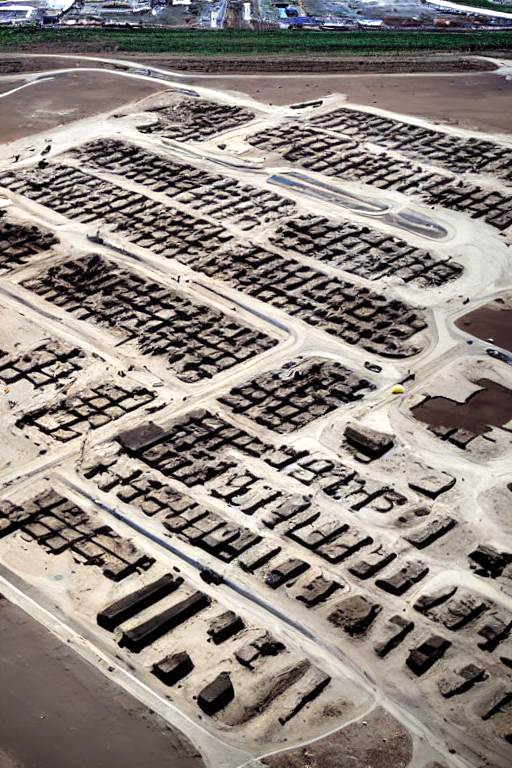
The Environmental Protection Agency (EPA) last issued, on September 2022, six Requests for Applications (RFAs) for various brownfields grants. For grant writers and applicants, that was a major funding opportunity for any applicant that can assess and/or remediate brownfields in their local communities. Those kinds of RFAs are not routinely issued. The EPA defines a brownfield in a legalistic, confusing way as “a property, the expansion, redevelopment, or reuse of which may be complicated by the presence or potential presence of a hazardous substance, pollutant, or contaminant. It is estimated that there are more than 450,000 brownfields in the U.S.”
That definition is broad, and many states have narrowed the definition somewhat. The six RFAs that were on the street as of September 2022 had $169.1M total up for grabs:
- Brownfields Community-Wide Assessment Grants: This program provide funding for “brownfield inventories, planning, environmental assessments, and community outreach.” There’s $30.5M available, with 61 grants to $500K to be made. Nonprofits, public agencies, and Tribes—including Alaskan Native Villages—are eligible applicants. “Assessment” is obviously easier than remediation, so this kind of funding frequently goes to smaller applicants, who may not necessarily have the skills to do full-scale remediation.
- Brownfields Assessment Coalition Grants: This program provides funding for more or less the same activities as the Community-Wide Assessment Program, except that applicants are supposed to form “coalitions” for implementation. Whether “coalitions” add anything beyond bureaucracy, process, and meetings is up for grabs—but we don’t make the rules. There’s $20M available, with grants to one million dollars. Lots of kinds of coalitions are eligible, with states, regional councils, units of local governments, Tribes other than in Alaska, and Alaska Native Regional Corporations/Alaska Native Village Corporations being possible coalition leaders.
- Brownfields Community-Wide Assessment Grants for States and Tribes: This program provides funding for more or less the same activities as the two Assessment Programs listed immediately above. There’s $35M available with 17 grants to $2M to be made, so the funding is a bit larger. States, Tribes other than in Alaska, and Alaska Native Regional Corporations/Alaska Native Village Corporations are eligible applicants
- Brownfields Revolving Loan Fund (RLF) Grants: RLF grants provide grants to fund revolving loan programs that are used to clean up brownfield sites. This is a good program if your agency wants to make loans to local landowners to remediate brownfields that have already been identified and/or assessed. There’s $10M available, with 10, $1M grants to be made. Nonprofits, public agencies, and Tribes (including, in this case, Alaskan Native Villages) are eligible applicants.
- Brownfields Cleanup Grants: Cleanup grants do what you’d think: fund remediation activities at brownfield sites owned by the applicant. There’s $60M available with grants to $1M. Nonprofits, public agencies, and Tribes are eligible applicants. If your agency owns a brownfields site that is ready for rehabilitation, this is the program to apply to. Some of the grants about “assessment” are really walkin’-around-money programs; this is a “do something” program, by contrast.
- Brownfields Multipurpose (MP) Grants: Brownfields MP grants provide funding to conduct a range of eligible assessment and cleanup activities at one or more brownfield sites in a given target area. There’s $13.6M available, with 17 $800K grants. Nonprofits, public agencies, and Tribes are eligible applicants.
For all of these RPAs, EPA emphasized what it called “Environmental Justice,” which is just a new phrase for an old concept. “Environmental Justice” now means that if your agency and/or the project serves low-income communities of color, and especially African American, Latino, or Native American communities, you should definitely apply, because you’re likely to get extra points. A sort of federal bureaucracy mad lib game can involve adding the word “justice” to any other concept—”housing justice,” or “health justice,” or, now, “environmental justice.” Doesn’t everyone love justice? We can help make sure your application speaks to environmental justice issues.
We’ve written many funded EPA grants, including for brownfields and “environmental justice,” over the years, but we’ve rarely seen seen so much grant funding available at one time. The various “Assessment” grant programs should be of particular interest, as these are classic “walking around money” opportunities. Grantees only have to do process activities like “assessment” and “outreach”, and they don’t really have to demonstrate any outcomes. An assessment might find no eligible brownfields sites, for example. Since the brownfields issue has been around for about 40 years, with lots of grants available, a cynic might say “haven’t all the brownfields sites already been assessed and outreach conducted?” Probably, but that doesn’t mean your agency can’t get a big EPA grant to do this all over again. Gotta love Congress.
The deadline for all of these programs was November 22. Make sure that, next time the EPA issues Brownfields and other grants, you call 800.540.8906 ext. 1 or email seliger@seliger.com for a fast, and always free, fee quote. We’ll write your entire EPA Brownfields proposal or edit your draft for a reasonable flat fee. As grant writers, we make your life easy by completing responses to HUD and other Requests for Applications (RFAs).